





|
Assata Shakur is the blueprint of what the power of a Black woman looks like. She refused to allow the never-ending misogyny of this world to keep her from living life and fighting in a world that looks down on our Black women. She escaped from prison and was able to die a free woman in Havana, Cuba, among people who knew protecting this queen was the mission the universe had for them. She was, and always will be, a revolutionary to spark the fire in those of us who are ready to walk in the footsteps she left behind.
"I am about life. I'm going to live as hard as I can and as full as I can until I die, and I'm not letting these parasites, these oppressors, these greedy racist swine, make me kill my children in my mind before they are even born." Her words are so bold and powerful, and needed right now, given how society talks about our children, their future, and even our lives, as if they have no meaning. It is up to us to let our children know that we write our stories without the edits of others. We can’t allow them to write our stories without our voices, and she is the example that no matter what, you fight for your people, your future, your legacy, because we do it all for our future generations. She is now the ancestor I aspire to be when I pass on, knowing that when people speak my name, there is power and inspiration behind it. She will truly be missed. ~ Klay “Capitalism meant that rich businessmen owned the wealth, while socialism meant that the people who made the wealth owned it." Assata came to that understanding through lived experience. As a young girl moving from segregated North Carolina to New York, she was promised a “better” education—only to face daily humiliation from white teachers who refused to see her. She wrote about one formative moment at P.S. 154 in Queens, when her teacher called her to the chalkboard to write the letter “L”. “I wrote my pitiful little second grade L on the blackboard. After looking at me and nodding, she made a big, fancy L next to mine. ‘Is this what you’re trying to make, JoAnne?’ Her expression was smug and the whole class broke out laughing. I wanted to go somewhere and hide… After that, it seemed that every time I mentioned something I had learned down South she got mad. She never saw my raised hand.” This was Northern “integration”: the same racist hierarchy in a new geography. As Assata reflected: “I’m not saying that segregation was a good system… But Black children encountered support and understanding and encouragement instead of the hostile indifference they often met in the ‘integrated’ schools.” Assata’s life reminds us that the fight for just schools is inseparable from the fight against the economic systems that exploit Black labor and suppress Black potential. Her passing is a profound loss, but her lessons—about dignity, truth, and collective struggle —remain a guiding force for our work. May she rest in power, and may we honor her by continuing the fight she helped define. ~ Jesse
0 Comments
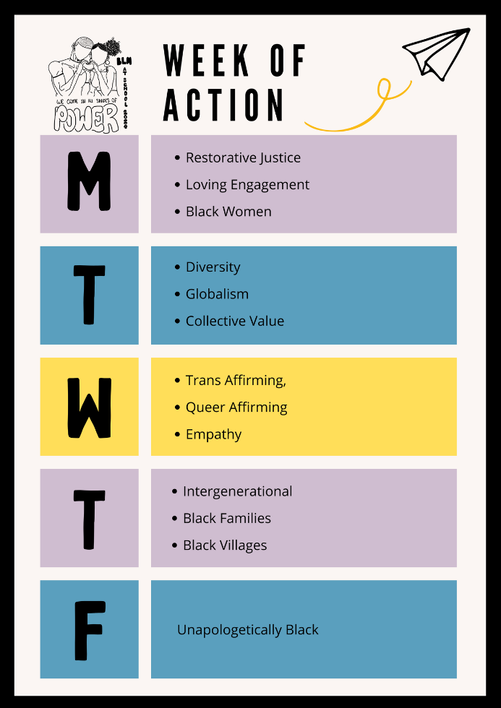
Restorative Justice Practices are connected to the world we strive to achieve when it comes to creating liberatory spaces. But what do we truly know about liberation? The concept of restorative justice comes from social justice and its connection to incarceration. Incarceration, or imprisonment, is basically the opposite of liberation. I have participated in all the different trainings and led teams and workshops on Restorative Justice Practices. But, I also know that it is a way of life that completely goes against our human nature and systemic structures. This is why so many schools are not successful in their full implementation. Recently, I have been questioning and pondering on if it truly works. And the answer is yes, and. Anything that provides space for us to simply pause and think, pause and be still, or simply be is a good habit to learn.
This is not simply a way to deal with problems and make sure everyone is heard. It is also a good time to recognize harm to determine if that harm should continue. It is not simply a blanket apology wrapped up in a holistic bow. It is now a box to be checked off when you make your new DEI goals. It is the time to have actual conversations with active listening, and not simply waiting to speak. It is the time to face your ignorance and your wisdom. It is the time to step up and step back. It is time to sit with someone in silence. To simply observe what is not being said, and when words fail you. It should be proactive and not reactive. It is not the time for someone to be right and someone to be wrong, but rather a space for honesty and kindness. But, never kindness for the sake of being kind, or even worse, simply because one is fearful to share their truth. Or even worse, using the space to have a trauma-induced response. There are other and better spaces for that work. Restorative Practices are not it. THIS is liberation. THIS is being free. THIS is rare because many of us have been taught to simply exist and seldom taught to thrive and breathe freely. If you are in a space that feels wrong or toxic, then know that you are not in a restorative justice space. Leave immediately. In October, the Black Lives Matter at School focus is on the principle of Restorative and Transformative Justice. This principle is a guiding light, especially as we approach our “Abolition Day,” part of our Year of Purpose. Restorative and Transformative Justice calls us to build spaces where we can make mistakes, heal, and evolve together, all while striving to dismantle punitive systems and create a more nurturing, inclusive world.
The need for change is urgent. Black youth are dramatically disproportionately suspended and expelled from schools, a trend that escalated with the spread of so-called zero-tolerance policies—policies modeled on the racist “war on drugs.” As Michelle Alexander, author of The New Jim Crow, points out, Many people imagine that zero tolerance rhetoric emerged within the school environment, but it’s not true. In fact, the Advancement Project published a report showing that one of the earliest examples of zero tolerance language in school discipline manuals was a cut-and-paste job from a U.S. Drug Enforcement Administration manual. These policies, instead of making schools safer, have criminalized students—particularly Black students—and mirrored broader systems of racial injustice. The statistics are staggering: Black students are suspended at four times the rate of white students nationally. And as Monique Couvson (formerly Morris) reveals in her book Pushout, Black girls are the most disproportionately suspended at six times the rate of white girls. Although Black girls make up only sixteen percent of the female student population, they account for nearly one-third of all girls referred to law enforcement and more than one-third of all female school-based arrests. These numbers show that our current systems of school discipline are failing Black youth and urgently need to be transformed. When we talk about restorative justice, we mean more than just addressing harm; we aim to foster a culture that bonds us together through empathy and collective growth. Transformative justice takes this a step further by challenging the systems that perpetuate harm in the first place, seeking to reshape our environments to prioritize healing over punishment. This is what it means to live in a “beloved community”—one where we not only work through conflicts but also reimagine the structures that lead to conflict. Unfortunately, some schools have implemented restorative justice in a way that is more performative than transformative. These schools may claim to practice restorative justice by limiting suspensions or hiring an additional counselor, yet fail to address the deeper needs of students. True restorative justice requires a genuine investment of resources, including comprehensive professional development for all educators so they can effectively use practices like peace circles and culturally relevant social-emotional learning proactively—before conflicts arise. It also means hiring a dedicated restorative justice counselor that can help with trainings and coordinate efforts across the building. As well, it requires creating school policies and curriculum rooted in social justice, so that when harm is caused there is justice to restore. Howard Zehr, a professor of restorative justice at Eastern Mennonite University, explains that traditional punitive approaches—known as retributive justice—focus on these questions:
The BLM at School movement calls for funding and implementing restorative justice practices to replace these retributive, zero-tolerance approaches. Restorative practices aren’t just reactive; they proactively build relationships and strengthen community bonds. Examples include peace circles for classroom discussions, peer mediation, community conferencing, trauma-informed teaching, and social-emotional learning. These practices shift the focus from punishment to healing and understanding, creating environments where students can feel safe and supported. In contrast to retributive justice, a restorative justice approach, as Zehr describes, asks:
By asking these questions, we can create nurturing communities instead of reacting to disruptions with punishment. Additionally, many antiracist movements in education are embracing transformative justice. A transformative approach, also outlined by Zehr, asks more fundamental questions:
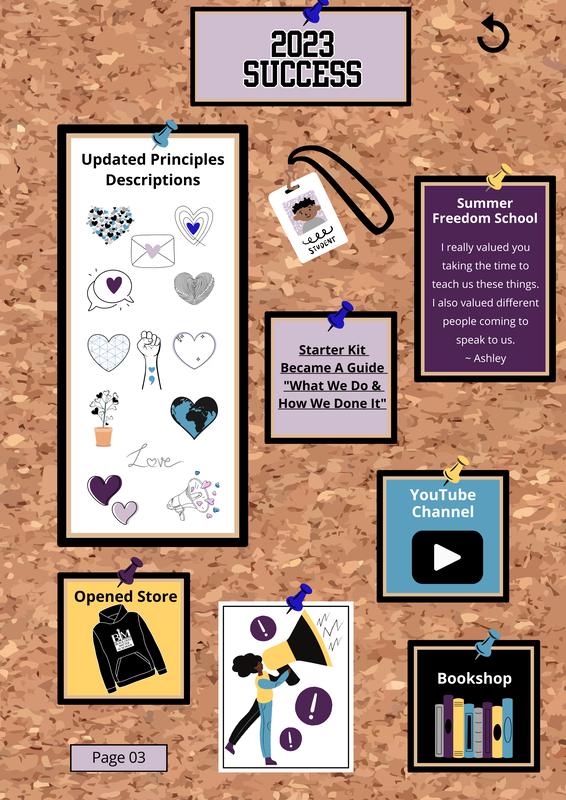
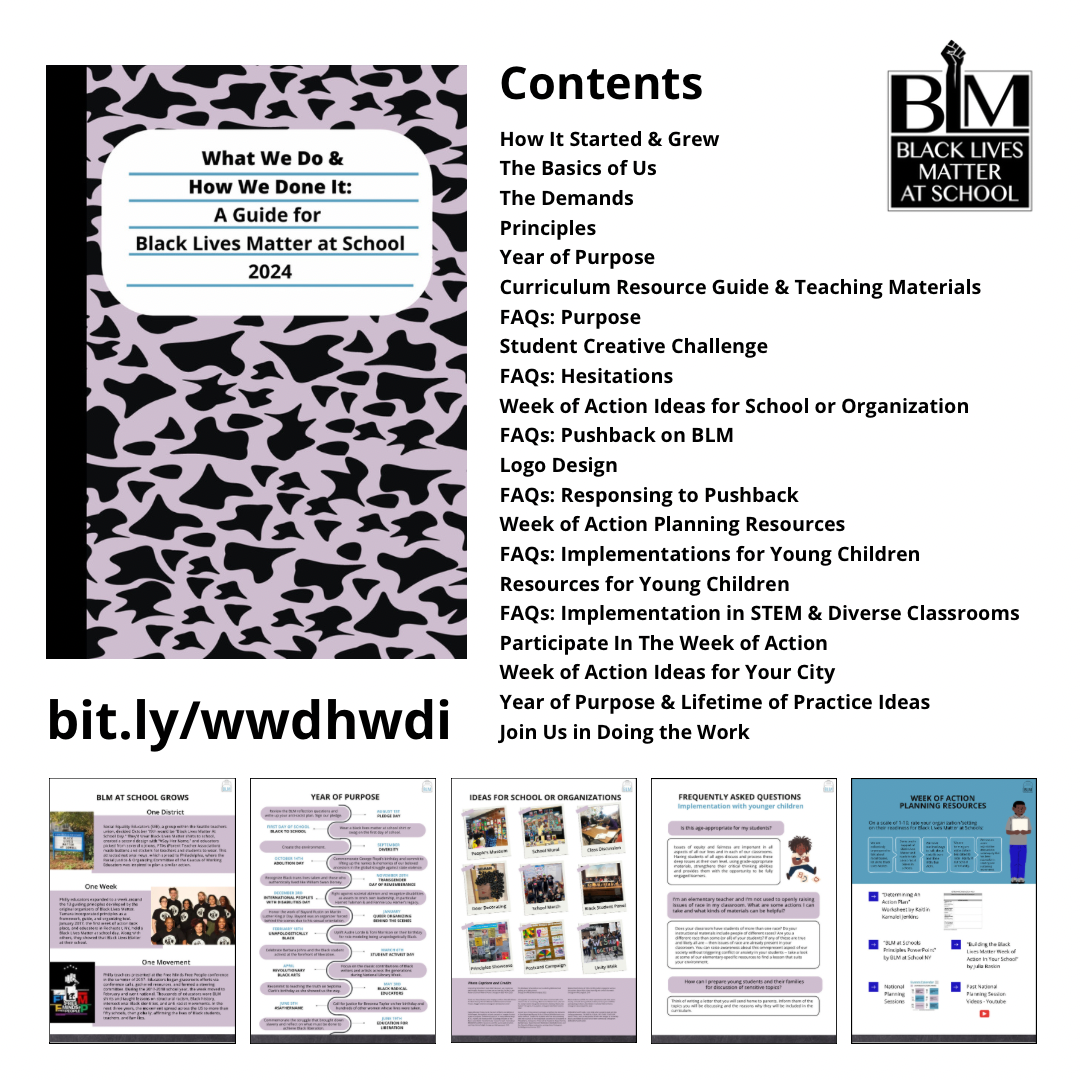
Restorative and Transformative Justice push us to look beyond individual actions and hold our systems accountable. In reimagining discipline, we move toward a future where Abolition Day is not just a symbolic event but a step toward abolishing harmful systems and replacing them with those that honor the fullness of our humanity. Jesse Hagopian National BLMAS Steering Committee Member Our principles have been changed to align with the Year of Purpose and our ongoing efforts. We combined a few of the principle narratives and added one to educate on this upcoming school year. You can read the description of each principle at the link below.
Diversity has become a buzzword that many people may struggle to truly understand. It's also become a targeted work as we are in the midst of attacks against racial justice work, including book bannings and legislation that prohibits teachers from talking about racial and gender justice. As a guiding principle we recognize and uplift the diversity within our collective Black identity, with a focus on our commonalities, differences, and shared circumstances. To reclaim diversity as an important concept for pursuing racial justice in education, I want to share with you three ways I think about diversity: diversity in action, diversity in beliefs, and diversity as a developmental goal.
Often we think of diversity in terms of people and things. Do we have a diverse representation of people? Do we have a diverse set of books? What comes to your mind when you hear Diversity in Action? I think of the pursuit of diversity. And the work of achieving diversity. But what does that look like? How might we pursue diversity and to what end? What does the work of achieving diversity look like? In the field of education, we can think of diversity in terms of the student body. Do you work with a diverse group of students? Most people immediately think of the racial makeup of their school or classroom, but race is just one aspect of diversity, though it's usually the one most people have in mind. In what other ways can our student body be diverse? Diverse in age? Diverse in ethnicity? Diverse in religion? Diverse in ability? How about the staff? Why might we want to pursue a diverse staff for our schools and classrooms? If we have diversity in our student body but our staff remains a monolith, what message does that send to students about how society is structured? Children learn so much from the way society is structured. They come to understand who is at the top based on whom they see in positions of power and leadership and who is at the bottom based on whom they see in subordinate positions. Thus, diversity in terms of representation in our schools and classrooms matters and must be pursued through our direct actions. One area of diversity I would like you to consider is diversity in our beliefs about children, teaching, and learning. I think this is a very important area that is often overlooked. Many of us harbor beliefs, both conscious and unconscious about children, families, teaching, and learning. Some of those beliefs are based on our experience as students and learners, and some of them have been passed on to us through society. When those beliefs take a deficit approach to children, their families, and their abilities to learn, those beliefs impact our ability to pursue equity and educational justice. I ask you to unpack some of your beliefs and think about how you might diversify those beliefs. One way to do this is to replace a belief about a certain group of children or family with an acknowledgment that we don't know them and our job is to learn about them. Instead of assuming that a family of recent immigrants who rarely engage at the school doesn't value education, perhaps we might come to believe that we know nothing about them, what they value, what they are going through, and what they need from us. And our job is to find out without thinking we already know. I ask my students to believe that every parent loves their child and wants the best for them. This shouldn't be too hard to accept, but someone always says well what about the parent who abuses their child. And I push back and say yes, there are some parents who hurt their children, but that doesn't mean they don't love them, instead, they may struggle to show that love in appropriate ways. And the majority of parents do love their children, so why not start from that place? Why not assume the best instead of the worse? Diversifying our beliefs about children and their families opens us up to rid ourselves of deficit views and build positive supportive relationships. At Sarah Lawrence College I taught a course in the spring on Children, Families, and Identity. I use this opportunity to introduce my students to racial, ethnic, and cultural identity development (REC ID for short). Though this work is not new, it rarely finds its way into the world of pre-service teachers. We read Why Are All the Black Kids Sitting Together in the Cafeteria by Dr. Beverly Daniel Tatum and other articles that explore REC ID. As I continue to teach this course and work on developing an anti-racist curriculum framework, I began to think of diversity in terms of development. I taught Theories of Development for many years so I remain engaged with the various explanations for how children develop. I taught previous courses where we explored physical, language, cognitive, social, and emotional development in young children and how teachers can support growth in these areas. When we examine early learning standards we see how these areas are addressed in terms of what children should be able to do at different ages and how they map onto other learning standards. The more I thought about REC ID the more I realized that this aspect of development was missing from the other areas of development. If REC ID matters and can be influenced by the curriculum, pedagogy, and relationships, then we can identify positive and developmental outcomes the same we do with language, physical, cognitive, and social/emotional development. What other ways do you think of diversity? How are you supporting race, ethnic, and cultural identity development in your work with young people? As you pledge to support Black Lives Matter in School, I hope you will also reclaim diversity as an action that requires diversifying our beliefs and fostering positive identity development Denisha Jones, Ph.D., J.D. Executive Director Defending the Early Years National BLMAS Steering Committee Member |
Get monthly updates. Subscribe to our
|
RSS Feed